

The Expanding Federal Focus on Cryptocurrency Crime
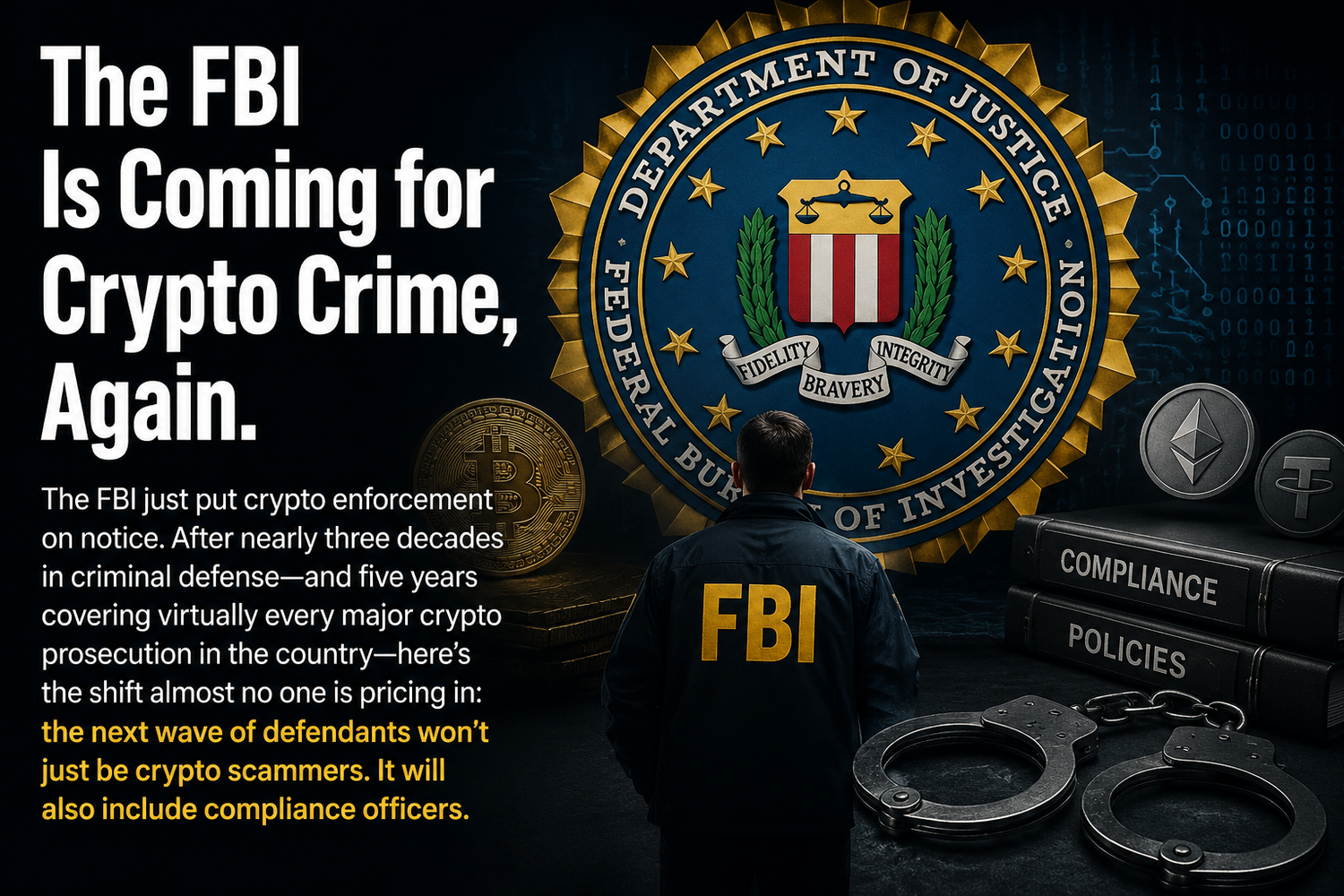
Federal agencies including the Department of Justice, SEC, CFTC, FinCEN, and IRS Criminal Investigation have devoted increasing resources to cryptocurrency and digital-asset enforcement. Prosecutors are using traditional statutes involving wire fraud, money laundering, securities fraud, tax offenses, and conspiracy to pursue conduct involving blockchain networks, digital assets, exchanges, DeFi protocols, NFTs, and privacy-enhancing technologies.
Carlo D’Angelo represents clients in complex cryptocurrency and digital-asset investigations and prosecutions, including matters involving alleged crypto fraud and Ponzi schemes, NFT wash trading and market manipulation, DeFi protocol exploits, money laundering through mixers or privacy coins, unlicensed money-transmission activity, cryptocurrency tax offenses, and racketeering allegations tied to blockchain-based conduct.
These cases are different from traditional financial prosecutions. They often turn on technical questions involving wallet attribution can depend on assumptions, clustering methods, exchange records, and other off-chain evidence that should be independently tested. A blockchain transaction may be visible on-chain, but visibility does not necessarily establish who controlled a wallet, why a transaction occurred, or whether the government’s interpretation is legally or factually correct.
Effective defense therefore requires more than familiarity with criminal statutes. It requires the ability to understand the underlying technology, scrutinize the government’s tracing methodology, challenge expert conclusions, and identify where rapidly evolving digital-asset regulation creates ambiguity about what conduct was actually prohibited.
If you are under investigation for cryptocurrency-related conduct, facing a digital-asset seizure, or dealing with federal agents or prosecutors, experienced counsel should be involved as early as possible.
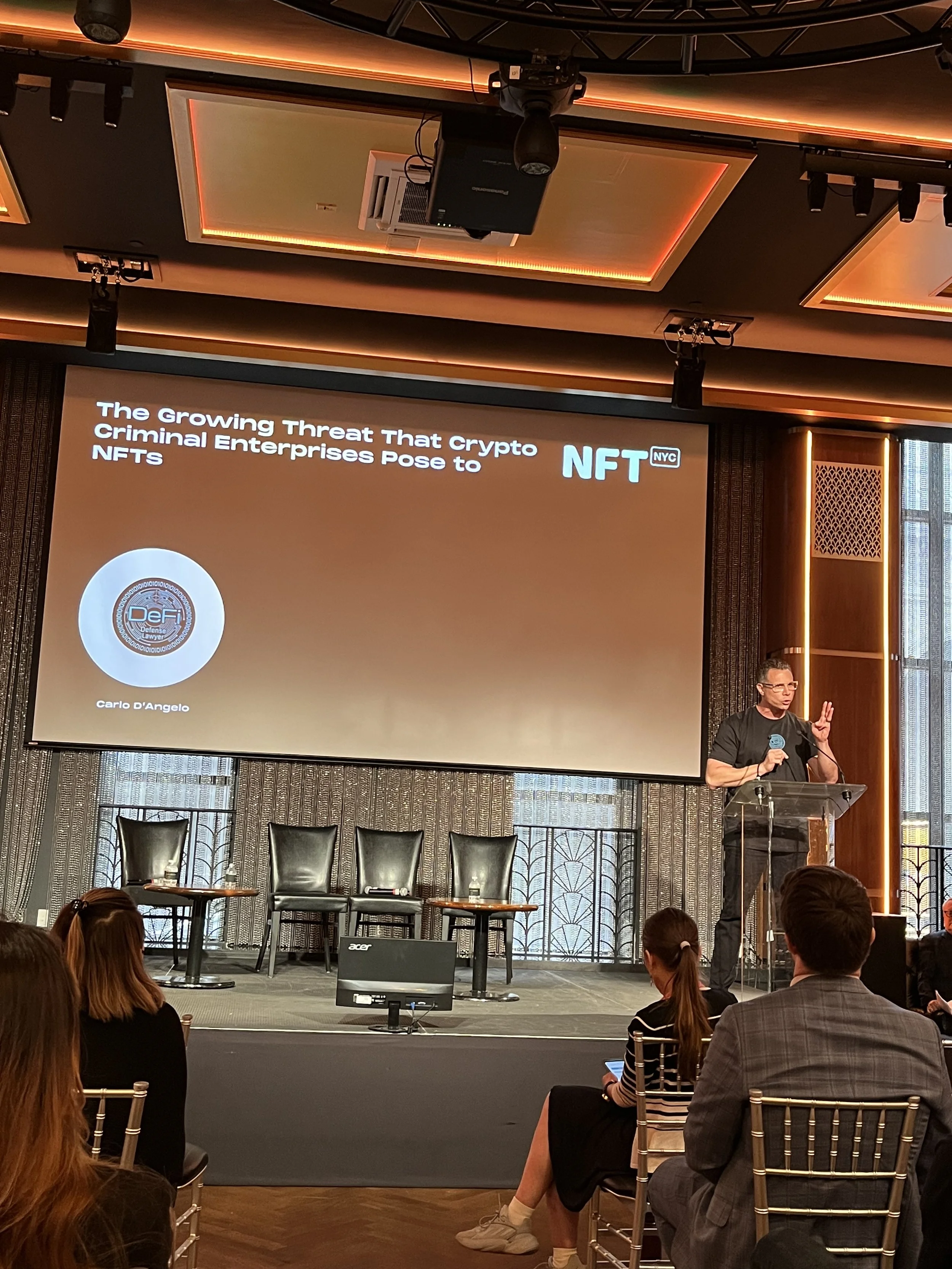
In 2022, Carlo was a featured guest speaker an NFT.NYC where he spoke on the subject of “The Growing Threat that Crypto Criminal Enterprises Pose to NFTs. In a poll conducted by NFT.NYC that year, Carlo was nominated along with four other lawyers in the category of “Most Expert Handling of the Law and NFTs”.
In 2023, Carlo spoke on the topic of money laundering and blockchain crime at the New York State Bar Association’s CLE conference at NYU entitled Deep Dive Into the Metaverse and Web3: The First Global Law Symposium.

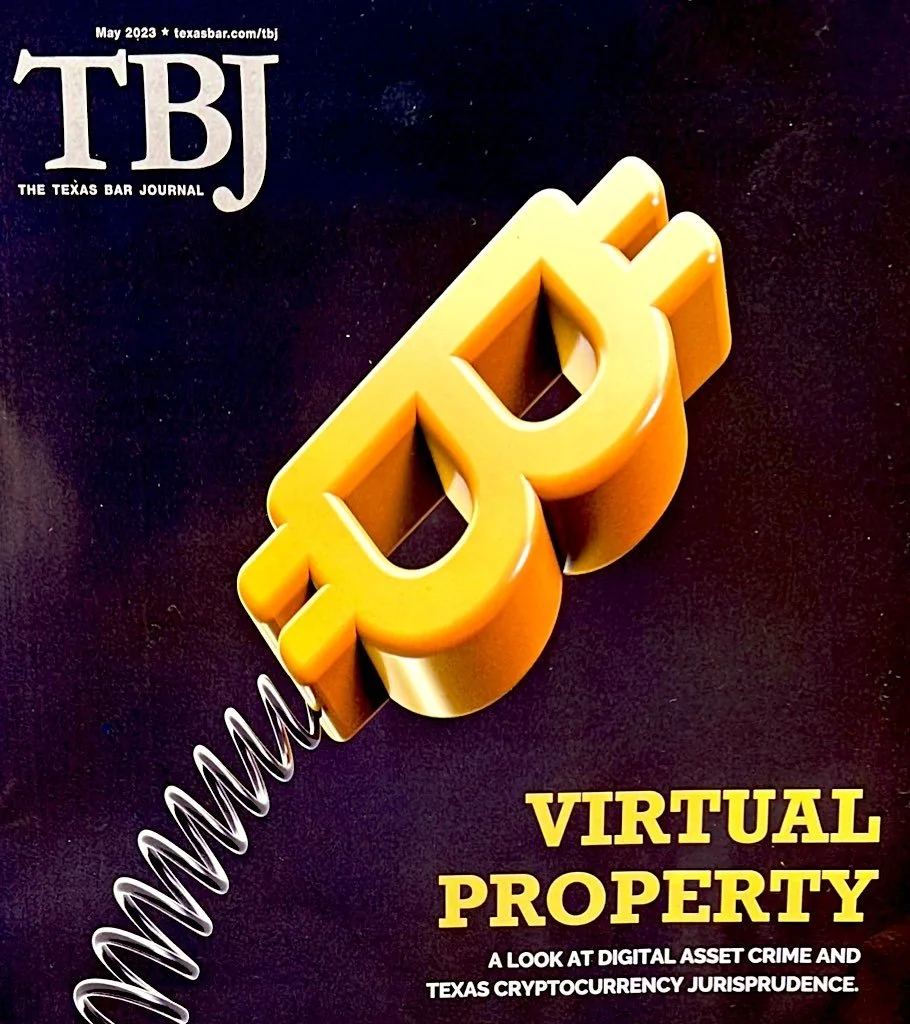
In May 2023, Carlo co-authored an article for the Texas Bar Journal entitled “Digital Asset Crime – Are We Still Early” discussing emerging trends in digital asset and cryptocurrency crime.
Penalties in Cryptocurrency Crime Cases
Wire Fraud (18 U.S.C. § 1343)
• Up to 20 years per count — each wire transmission is a separate count
• Federal forfeiture of all proceeds traceable to the fraud
Money Laundering (18 U.S.C. §§ 1956–1957)
• Up to 20 years (§ 1956 — laundering with intent to promote)
• Up to 10 years (§ 1957 — transactions over $10,000 in proceeds)
• Civil and criminal forfeiture of all involved assets
Securities Fraud / Unregistered Securities Offerings
• SEC civil penalties: disgorgement, injunctions, bars from serving as officer or director
• Criminal securities fraud: up to 20 years under 15 U.S.C. or 18 U.S.C. § 1348
Tax Evasion on Crypto Gains
• Unreported cryptocurrency income is taxable; willful failure to report is a federal crime
• Tax evasion: up to 5 years; tax fraud: up to 3 years per count
Civil asset forfeiture in cryptocurrency cases is particularly aggressive — the government can freeze and seize wallets, exchange accounts, and fiat proceeds at the outset of an investigation, often before any charges are filed.
.
Carlo's Approach to Crypto Crime Defense
Challenging Blockchain Attribution
The government's chain analysis (typically performed by Chainalysis or CipherTrace) attempts to link wallet addresses to specific individuals. These probabilistic attribution methods have significant margins of error and are subject to challenge. Carlo retains independent blockchain forensic experts to scrutinize the government's tracing methodology and challenge attribution of addresses to his clients.
Regulatory Ambiguity as a Defense
Much cryptocurrency regulation operates in legal gray areas. Many defendants charged with failure to register as an MSB or with operating an unlicensed money transmitting business genuinely lacked notice that their conduct was regulated. Carlo develops good-faith and lack-of-willfulness defenses based on the evolving and often contradictory regulatory guidance from FinCEN, the SEC, and the CFTC.
Contesting the Fraud Theory
Wire fraud requires proof of a scheme to defraud and intent to harm victims. Many cryptocurrency projects that failed — and many NFT ventures that lost value — did not involve fraudulent intent. Carlo challenges the government's narrative by presenting evidence of genuine business intent, disclosed risks, and the inherently speculative nature of crypto markets.
Asset Forfeiture Defense
Carlo challenges pre-indictment asset restraints, contests the traceability of seized cryptocurrency to any alleged offense, and litigates forfeiture to protect his clients' legitimate assets throughout the prosecution.
Frequently Asked Questions
Q: Is cryptocurrency traceable?
Yes — blockchain transactions are permanently recorded on a public ledger, and government contractors like Chainalysis can trace transaction flows across wallets. However, tracing a wallet to a specific person requires additional evidence, and the attribution methods used carry significant uncertainty. Carlo challenges these methods in every case.
Q: Can I be charged with money laundering for using a crypto mixer?
Federal prosecutors have charged users of cryptocurrency mixing services under 18 U.S.C. § 1956. The viability of these charges depends on whether the government can prove knowledge that the mixed funds represented proceeds of a specified unlawful activity. Carlo evaluates the strength of the government's knowledge evidence in every case.
Q: What should I do if the government freezes my crypto accounts?
Contact Carlo immediately. Pre-indictment asset restraints in crypto cases are often obtained ex parte — without notice to the account holder. Carlo can move to lift or modify asset restraints, challenge the government's tracing theory, and protect your access to legitimate assets throughout the investigation.
Q: Are NFT transactions subject to securities laws?
It depends. The SEC has taken the position that certain NFT offerings constitute unregistered securities offerings under the Howey test. The analysis is fact-specific and legally contested. Carlo has published on this issue and defends clients navigating the intersection of digital asset innovation and federal securities regulation.
Crypto Crime Defense Requires More Than Legal Experience. It Requires Technical Expertise.
Carlo D'Angelo testified remotely before the U.S. Treasury, published scholarship on digital asset crime, and defends cryptocurrency cases with the technical depth the government's own experts face. Call now.