

Charged With DWI in Texas?
Your License. Your Freedom. Your Future. Fight Back.
A DWI arrest in Texas does not have to mean a conviction. Tyler Texas Criminal Defense Lawyer Carlo D'Angelo has spent over 28 years fighting DWI charges across East Texas and in federal courts nationwide. He knows the science, the law, and the pressure points prosecutors don't want you to know about.
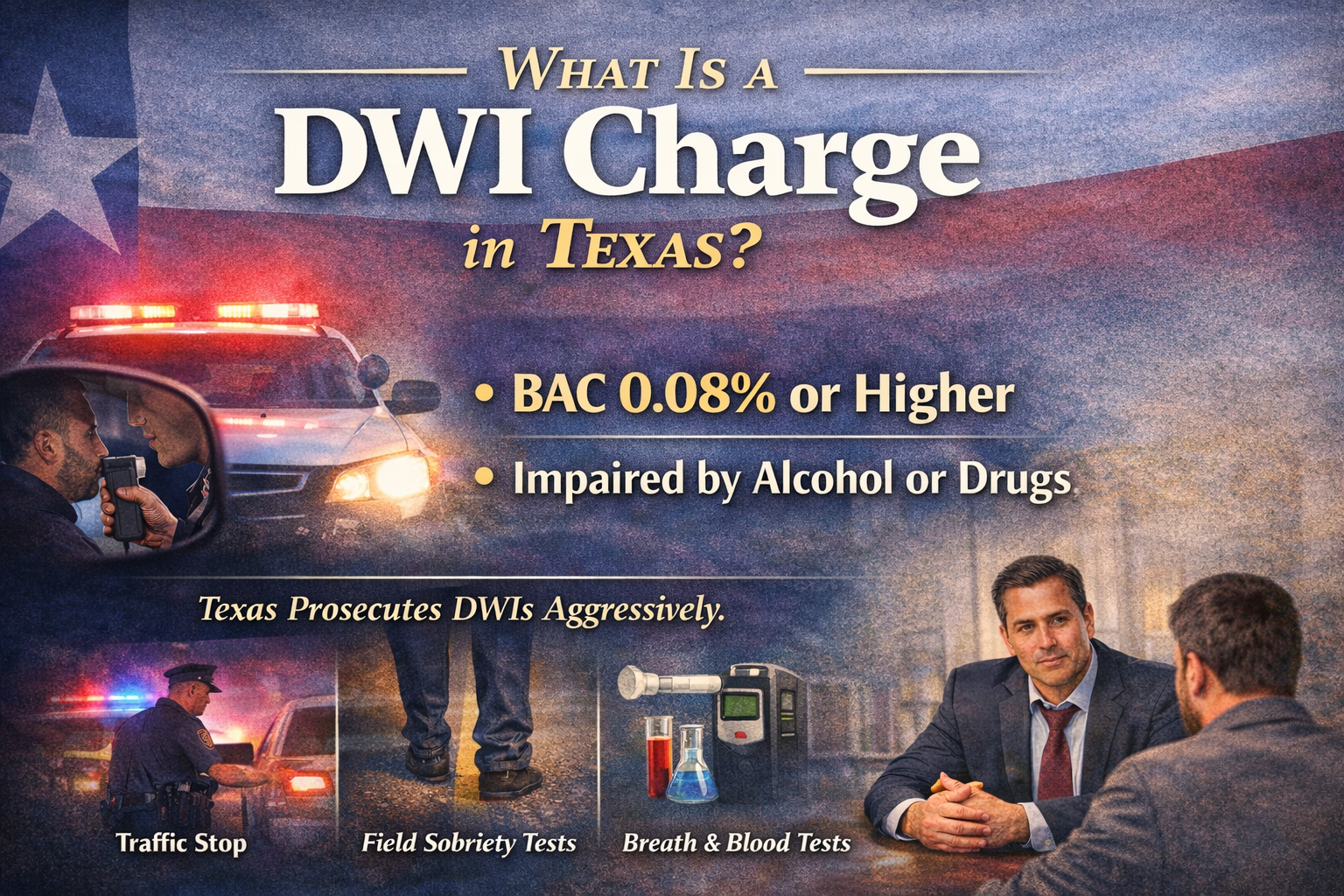
What Is a DWI Charge in Texas?
In Texas, Driving While Intoxicated (DWI) means operating a motor vehicle in a public place while intoxicated — either with a blood alcohol concentration (BAC) of 0.08% or higher, or while lacking the normal use of your mental or physical faculties due to alcohol, a controlled substance, a drug, or any combination thereof. The bar is not limited to alcohol: prescription medication, marijuana, and other substances can all support a DWI charge.
Texas DWI cases are prosecuted aggressively by the state. From the moment you are pulled over, law enforcement is building a case against you. The roadside observations, field sobriety tests, and chemical tests (breath or blood) are all evidence that a skilled defense attorney can challenge — and often defeat.
The most important decision you will make after a DWI arrest is who represents you. The difference between a conviction and a dismissal often comes down to the quality of the defense.
What You're Facing If Convicted
Texas DWI penalties escalate sharply with each offense and with aggravating factors like a child passenger, a high BAC, or an accident causing injury or death. Here's what a conviction can mean:
First Offense (Class B Misdemeanor)
• 72 hours to 180 days in jail
• Fine up to $2,000 (plus surcharges that can reach $6,000 over 3 years)
• Driver's license suspension: 90 days to 1 year
• Annual surcharges of $1,000–$2,000 to retain your license
• Mandatory installation of an Ignition Interlock Device (IID) in many cases
Second Offense (Class A Misdemeanor)
• 30 days to 1 year in jail
• Fine up to $4,000
• Driver's license suspension: 180 days to 2 years
Third Offense (Third-Degree Felony)
• 2 to 10 years in Texas state prison
• Fine up to $10,000
• Driver's license suspension: 180 days to 2 years
• Permanent felony record
Additional Consequences That Don't Show Up on a Charge Sheet
• Loss of employment — especially in licensed professions, transportation, healthcare, or government
• Immigration consequences for non-citizens, including deportation
• Loss of firearm rights (felony DWI)
• Dramatically increased auto insurance rates
• Restrictions on housing, credit, and professional licensing
A DWI is not a minor traffic matter. It is a criminal conviction that follows you for life. The right time to fight it is before a conviction — not after.
Carlo's DWI Defense Strategy
Carlo D'Angelo does not take a one-size-fits-all approach to DWI defense. Every case has a specific set of facts, and the defense must be built around those facts — not around a generic plea deal strategy. His approach begins with a forensic examination of the state's evidence.
Challenging the Stop Itself
The Fourth Amendment requires law enforcement to have reasonable suspicion to pull you over. If the stop was unlawful, everything that follows — the field sobriety tests, the breath test, the arrest — may be suppressible. Carlo scrutinizes every traffic stop for constitutional defects.
Attacking Field Sobriety Tests
Standardized Field Sobriety Tests (SFSTs) — the walk-and-turn, one-leg stand, and horizontal gaze nystagmus — are notoriously unreliable. Fatigue, medical conditions, uneven road surfaces, and officer technique all affect results. Carlo has trained extensively in the same protocols used to administer these tests and knows exactly where they fail.
Challenging Breath and Blood Evidence
Breathalyzer devices require proper calibration, maintenance, and operator certification. Blood draws must follow strict chain-of-custody protocols and be analyzed by certified labs. A single gap in these procedures can render the chemical evidence inadmissible. Carlo works with independent forensic toxicologists to scrutinize the state's lab results.
The ALR Hearing — Fighting for Your License
When you are arrested for DWI in Texas, the state automatically moves to suspend your driver's license through an Administrative License Revocation (ALR) hearing. You have only 15 days from the date of arrest to request this hearing. Carlo handles the ALR process aggressively — not just to fight the suspension, but to use the hearing as a discovery tool to examine the officer's testimony before trial.
Negotiating From Strength
When the facts support it, Carlo negotiates from a position of strength — not desperation. Prosecutors
know which defense attorneys will push cases to trial and which ones will fold. Carlo's 28-year trial record means prosecutors take his cases seriously from the first conversation.
Frequently Asked Questions About Texas DWI
Q: Can I beat a DWI if my BAC was above 0.08%?
Yes. A BAC result above the legal limit does not automatically mean a conviction. The way the test was administered, the machine's calibration records, the chain of custody on a blood sample, and the officer's compliance with proper procedures are all challengeable. Carlo has successfully challenged BAC evidence in cases well above 0.08%.
Q: What happens if I refused the breath or blood test?
Refusing a chemical test in Texas triggers an automatic driver's license suspension under the implied consent law — but it also deprives the state of its most powerful piece of evidence. You have the right to request an ALR hearing within 15 days of your arrest to contest the suspension. Don't wait — call Carlo immediately.
Q: Will a DWI affect my commercial driver's license (CDL)?
A DWI conviction can result in a one-year disqualification of your CDL for a first offense — and a lifetime disqualification for a second offense. If your livelihood depends on your CDL, the stakes in your DWI case could not be higher. Carlo understands the specific consequences CDL holders face and builds a defense strategy accordingly.
Q: What is the ALR hearing and why does it matter?
The Administrative License Revocation (ALR) hearing is a civil proceeding separate from your criminal case that determines whether your driver's license will be suspended. You must request it within 15 days of arrest or you automatically waive the right. Beyond fighting the suspension itself, the ALR hearing is a strategic opportunity: it forces the arresting officer to testify under oath before trial, giving Carlo critical insight into the state's case.
Q: Is a first-offense DWI a felony in Texas?
A standard first-offense DWI in Texas is a Class B misdemeanor. However, it can be elevated to a felony if a child under 15 was in the vehicle, if the offense involved an accident causing serious bodily injury (intoxication assault), or if someone was killed (intoxication manslaughter). Prior out-of-state DWI convictions may also be used to enhance charges.
Q: How soon should I hire a DWI attorney?
Immediately. The 15-day window to request an ALR hearing begins running the moment you are arrested. Evidence degrades. Witnesses become unavailable. Dashcam and bodycam footage has retention limits. The sooner Carlo is in your corner, the more tools he has to build your defense.