

The FBI Is Coming for Crypto Crime, Again
The FBI just put crypto enforcement on notice. After nearly three decades in criminal defense—and five years covering virtually every major crypto prosecution in the country—here’s the shift almost no one is pricing in: the next wave of defendants won’t just be crypto scammers. It will aslo include compliance officers.
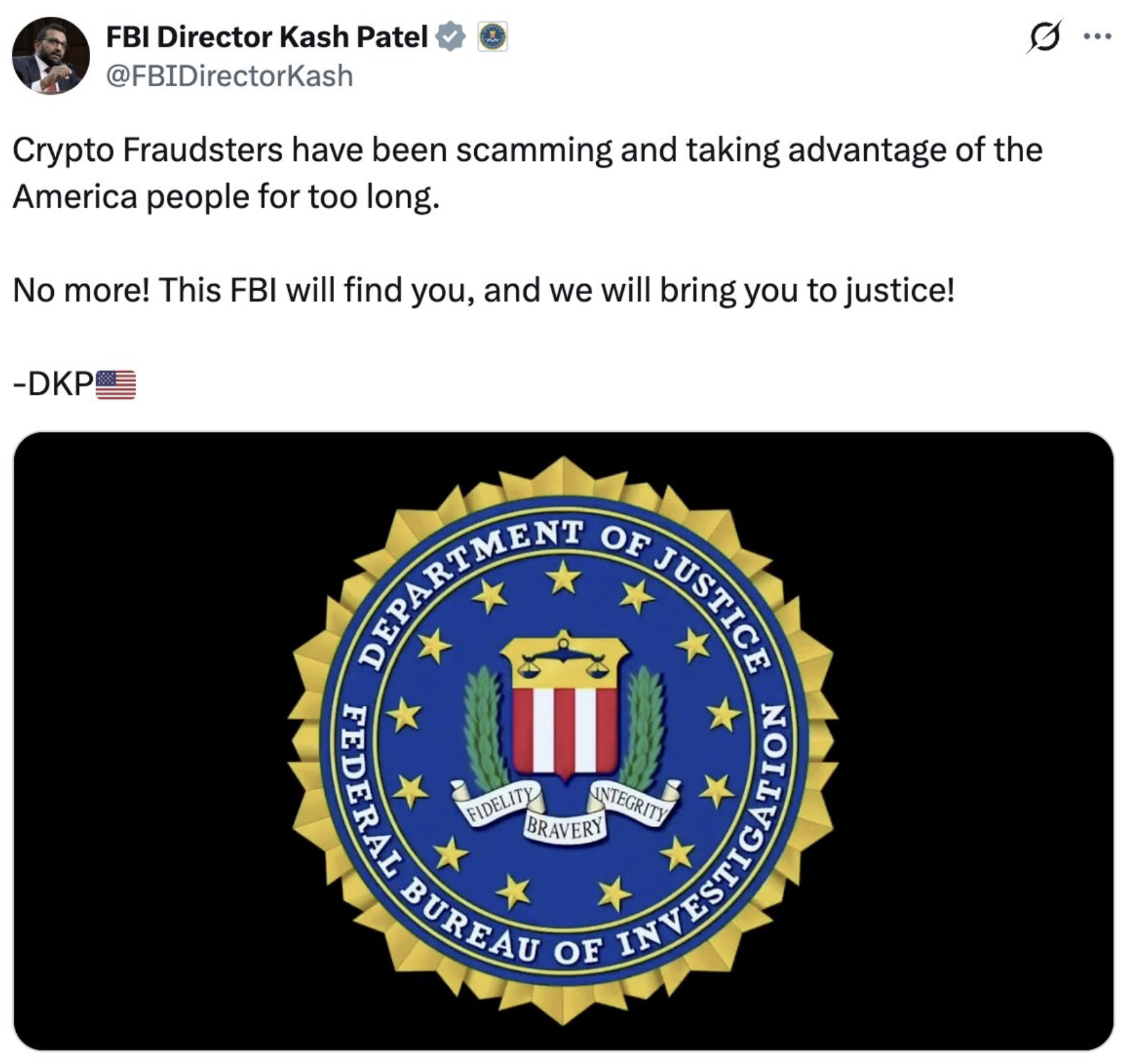
“Crypto fraudsters have been scamming and taking advantage of the American people for too long. No more. This FBI will find you, and we will bring you to justice.”
That was FBI Director Kash Patel this week, putting crypto enforcement on notice. I read a signal like that the way I read every enforcement signal—not as a headline, but as a forecast.
I’ve practiced criminal defense for nearly thirty years. For the last five, I’ve followed virtually every major crypto criminal prosecution in the country—reporting on them, writing about them, and in case after case sitting in the gallery while they unfolded. That vantage point is why Patel’s warning reads differently to me than it might to most. The enforcement he’s promising is real. But the target is quietly moving.
A doctrine that keeps evolving
Crypto crime in America has a starting point, and it isn’t FTX. It’s Silk Road—a dark-web marketplace, Bitcoin as the payment rail, and a federal prosecution that set the template every case since has followed: take the asset that was supposed to enable the crime, and trace it home.
From there the doctrine evolved in real time—through the exchange collapses, the mixers, the memecoin schemes, and the first insider-trading case ever built on NFTs. And it’s about to take its sharpest turn yet, because of a law most people filed under “good news for crypto.”
Before I get to that law, it’s worth grounding what federal crypto enforcement actually looks like when it lands—because I’ve watched it happen.
What “justice” looks like up close
I sat in the gallery for United States v. Sam Bankman-Fried criminal case in Manhattan. Although I wasn’t the verdict—I did get to watch the government’s forensic accountant, Notre Dame’s Peter Easton, walk a jury through billions of dollars in customer funds and show, transaction by transaction, exactly where the victims’ money went. Money that was supposed to be sitting at the exchange had been routed somewhere else, and a careful expert with a stack of bank records made that undeniable. That is what federal enforcement looks like when it lands: not slogans, but a paper trail no one can argue with.
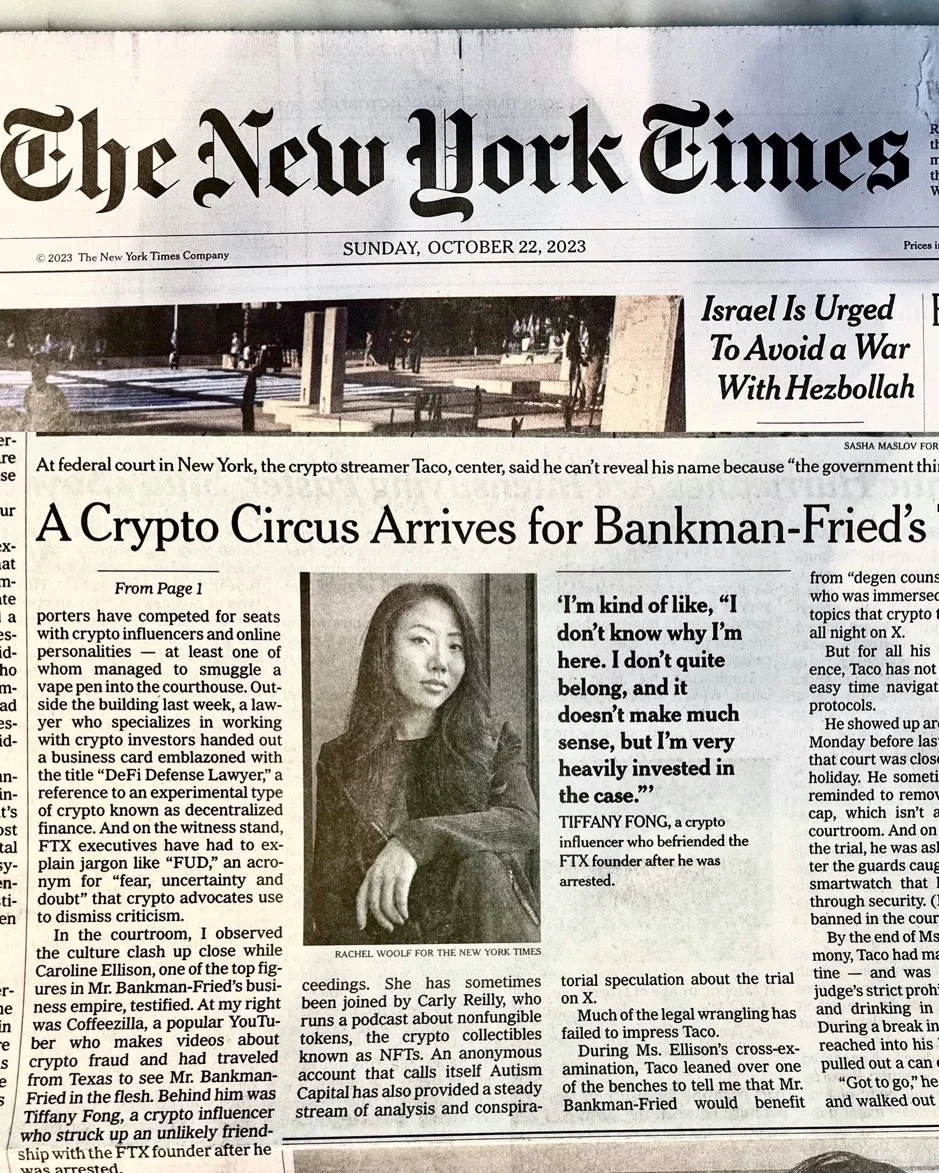
I was also there for the Nathaniel Chastain trial—the first insider-trading case the Justice Department ever built on NFTs. The charges were not exotic. Wire fraud. Money laundering. The same statutes that have anchored white-collar prosecutions for decades. What was new was the asset class. The government took tools it had used for a generation and pointed them at something no one had charged before.
That is the pattern worth internalizing. The tools don’t change. The targets keep getting newer.
The interest isn’t academic for me, but it isn’t only courtroom work either. I’ve published on digital asset crime in the Texas Bar Journal.
I've also spoken on blockchain crime before the New York State Bar Association, and testified remotely before the U.S. Treasury on digital asset reporting. Defending these cases and writing about the framework that produces them turn out to be the same study from two directions.

The old map of crypto crime
From Silk Road forward, “crypto crime” meant a familiar menu of charges aimed at a familiar set of targets.
The charges: money laundering, wire fraud, operating an unlicensed money transmitting business. The targets: centralized exchanges that cut corners, mixers that obscured the flow of funds, memecoin launches that turned into pump-and-dumps, and the pig-butchering rings that have drained billions from ordinary people through fake investment platforms—the exact harm FBI’s Operation Level Up was built to confront.
It was real, it was serious, and it filled federal dockets. But understand it for what it was: the warm-up. Every one of those cases sat on top of an established theory of liability. The defendant was, in essence, a thief or a fraudster using crypto as the instrument.
The next wave is structurally different.
The GENIUS Act changed the board
With the passage of the GENIUS Act, fully regulated stablecoins are now onboarding into the U.S. financial system. That is a genuine milestone—and it is also the moment the criminal exposure surface quietly expands.
Regulation does not arrive alone. It arrives with a compliance regime. For stablecoin issuers and the institutions that build on them, that means the Bank Secrecy Act, suspicious activity reporting, and OFAC sanctions screening—the same anti-money-laundering architecture that governs banks. And attached to that architecture are criminal penalties for getting it wrong.
This is where I’d ask you to read the situation the way I read every new regulation: backward, the way a prosecutor eventually will. Don’t start with what the rule requires. Start with what failure looks like, who holds the bag when it fails, and what a prosecutor would later point to as proof. Do that exercise honestly with the GENIUS Act’s compliance obligations, and a new category of defendant comes into focus.
The GENIUS Act imposes criminal penalties for unlicensed issuance, false certifications of monthly reports, false certification of AML/sanctions compliance programs, and misrepresenting insured status. On the compliance-certification piece, every permitted payment stablecoin issuer must annually certify that it has implemented an AML and economic-sanctions compliance program, and there are criminal penalties for individuals who knowingly sign false certifications—the bill text ties false certifications to the criminal penalties set forth under section 1350(c) of title 18, United States Code. Separately, the law provides that whoever knowingly and willfully participates in a violation shall be fined by the Department of the Treasury not more than $500,000 for each such violation.
The next wave of defendants won’t just be crypto scammers, they will include compliance officers
The next wave of crypto defendants won’t only be operators running a scam out of a boiler room. They will include issuers, founders, chief compliance officers, and BSA officers at otherwise legitimate companies—people charged not for stealing, but for a missed filing, a misread sanction, a transaction that should have triggered a report and didn’t, or a control that was built wrong and stayed wrong.
That is a profoundly different kind of case. The conduct is technical. The intent is contested. The defendant is frequently a professional who believed they were doing the job correctly, inside a regulatory regime so new that the guidance is still being written as the enforcement begins.
It carries a structural wrinkle worth naming, too: when an individual officer’s exposure starts to diverge from the company’s, corporate counsel is often conflicted out—which is how a compliance officer can suddenly find they need their own lawyer, separate from the institution they were trying to protect.
Same instinct, different clock
This is the seam I happen to sit in, and I sit in it from both sides.
In The Stablecoin Strategist, I track this regulatory regime as it’s being written—parsing the GENIUS Act, the CLARITY Act, and the FinCEN and Treasury rulemaking before anyone has to enforce any of it. In my defense practice, I represent the people who end up on the wrong side of rules like these once enforcement begins.
Same instinct, different clock. One vantage looks forward at the rule; the other looks backward from the indictment. They are the same discipline practiced at two points on the same timeline—and after five years watching this space, I’m convinced they’re about to become the same conversation.
If you issue stablecoins, build on stablecoin rails, or run compliance for a platform that touches them, the takeaway here isn’t alarm. It’s attention. This is a regime that rewards the people who read it closely while it’s still theory—and the cost of understanding it early is a great deal lower than the cost of explaining it late.
The FBI says it’s coming. On that, I take the Director at his word. The only real question is who’s paying attention.
Carlo D’Angelo is a federal criminal defense attorney in Tyler, Texas, and the author of The Stablecoin Strategist . The Stablecoin Strategist is free and is written for the people navigating this regime in the real world: operators, fintech and fund counsel, policymakers, institutional capital, and design-phase issuers—the ones who need to understand not just the letter of the framework, but where it gets dangerous. Subscribe to the paid tier if you’re a lawyer, compliance officer, or founder who needs the enforcement read before the enforcement arrives.